Learning to See in the Dark: Photographing Cities at Night
I picked up photography in the month of January, which in London meant one thing: learning in the dark. Short winter days left little choice, but what started as constraint quickly became direction. I found myself drawn to the way cities transform at night—moody, quiet, sometimes electric. As a natural night owl, it felt less like adapting and more like discovering the right medium. Daytime photography, by comparison, felt flat. Night became the language.
But photographing at night isn’t forgiving. It forces you to understand light in a much more deliberate way.
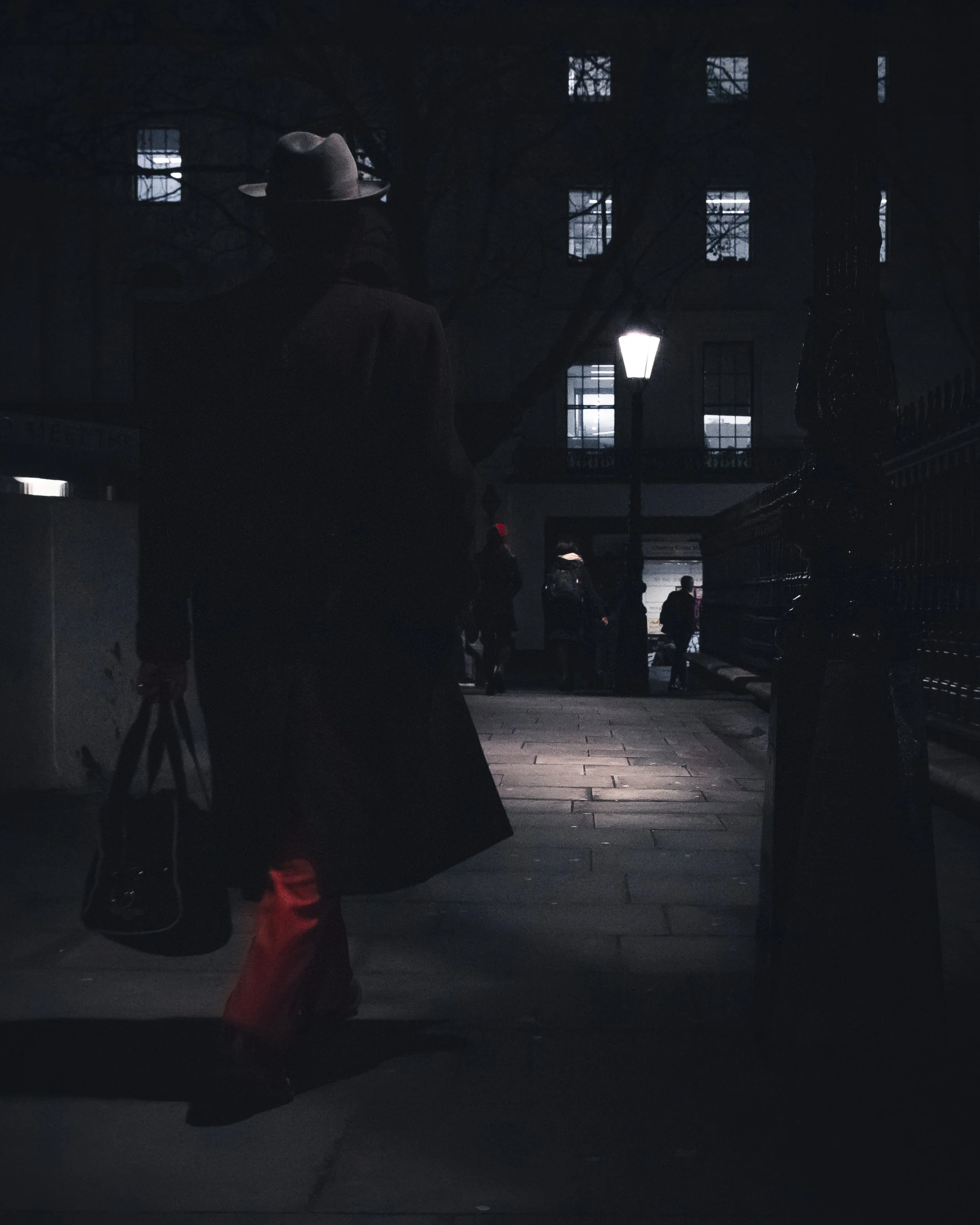
The first lesson is simple: you’re not photographing darkness, you’re photographing light within it. Night photography is about contrast—seeking out light sources and using them to shape a scene. A shopfront, a neon sign, even a single lamppost can become your entire composition. Over time, you stop looking at subjects and start looking at how they’re lit.
There’s also a practical layer: safety and discretion. I stick to busy areas of central London where there’s still movement and visibility. At the same time, blending in matters. The less attention you draw, the more natural your shots will feel. Oddly, looking like a photographer helps—looking out of place doesn’t.
Gear is often overstated, but at night it does matter. Low light pushes your camera to its limits. Faster lenses (like f/1.8 primes) and sensors that handle high ISO well give you more flexibility.
Equally important is shooting in RAW. RAW files retain far more image data than compressed formats, which gives you significantly more latitude in post-processing—especially when recovering shadows or adjusting exposure in low-light shots. Learning how to edit properly becomes part of the craft. It’s not just correction—it’s creative control over mood, contrast, and tone.
Ultimately, it comes down to intuition built through repetition. Night photography is a constant negotiation between shutter speed, ISO, and aperture. You learn by getting it wrong—until you start to anticipate what works.
You don’t master the night. You learn to work with it.
